2026-11-07 ·
Signs Your Drain Field Is Failing in Georgia Clay
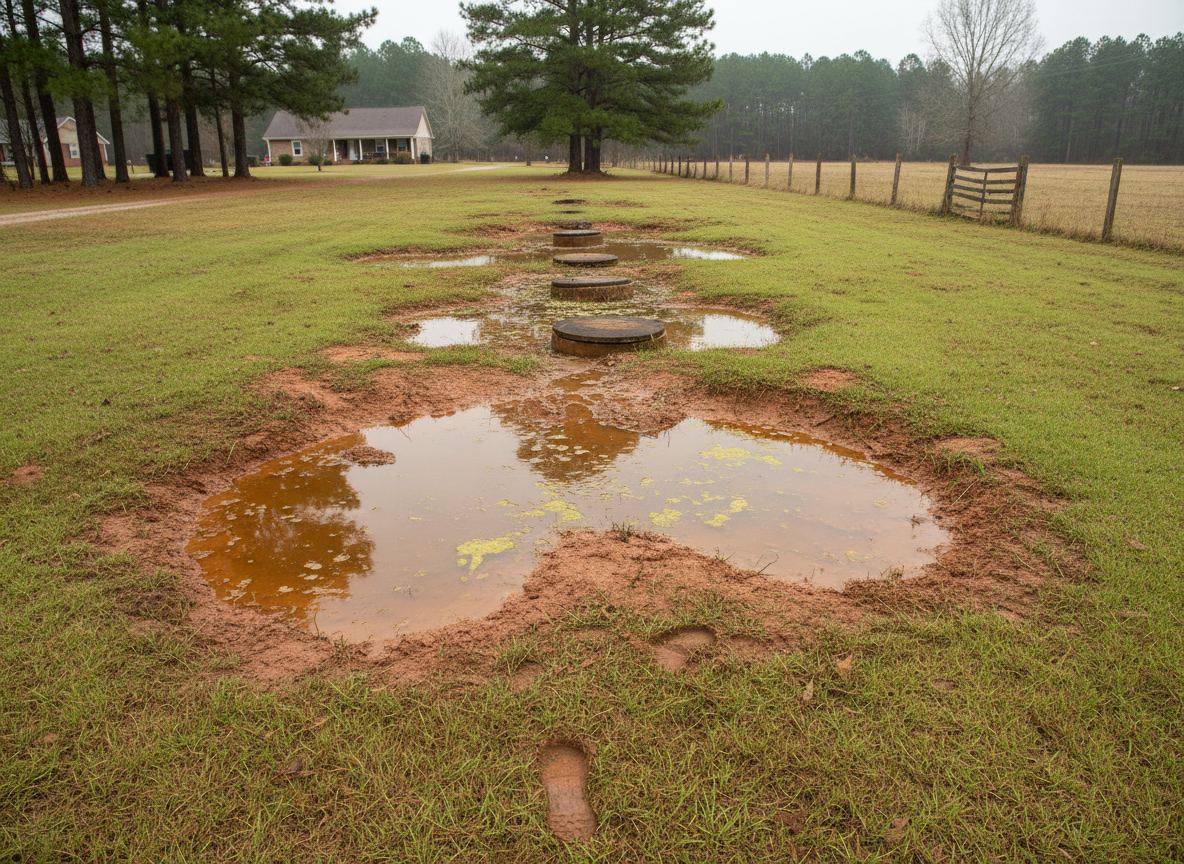
In Carroll County's red clay soils, a failing drain field typically shows up first as persistent wet patches or standing water in the yard even days after rain stops, along with occasional sewage odors near the absorption area.
Pooling Water After Heavy Rains
Carroll County sees frequent downpours that saturate the ground quickly. When red clay prevents proper absorption, water from the drain field rises to the surface and creates soggy zones or small puddles. Homeowners often notice these spots in the same location year after year, especially on rural lots where the system handles all household wastewater. The clay holds moisture longer than sandy soils, so the problem becomes visible faster. Checking the yard after a storm can reveal whether the field is still handling the load or if effluent is surfacing. If the wet area grows or smells develop, the field may need professional evaluation through a targeted drain field assessment.
Slow Drains and Indoor Backups
Clogged or saturated lines in the drain field cause water to back up through household fixtures. Toilets may gurgle or drain slowly, and showers can leave standing water that takes longer to clear. In older homes near the Historic Downtown Square or around the University of West Georgia, these symptoms often appear gradually as the clay compacts over time. The issue differs from a simple clog in the house plumbing because multiple fixtures are affected at once. Residents should track whether the slowdown happens after heavy use or right after rain events, since both point to field saturation rather than a pipe blockage inside the home.
Lush Grass Patches and Odor Patterns
Grass growing unusually green and thick over the drain field lines signals that wastewater is reaching the surface instead of filtering downward. In rural Carroll County properties, these bright strips often stand out against the rest of the lawn during hot summer months. At the same time, faint sewage smells may drift from the yard on warm evenings when humidity is high. The combination of overgrowth and odor usually means the absorption area can no longer treat effluent properly. Owners who mow regularly notice the pattern because the grass requires less fertilizer yet still outpaces surrounding areas.
Practical Checks for Local Homeowners
Walk the absorption area after a moderate rain and note any soft spots or visible moisture that should have drained within 24 hours. Measure the distance from the house to the wet zone to confirm it aligns with the known drain field location. Compare current conditions to past seasons, especially after the mild winters common here when the ground stays damp longer. Keep records of pumping dates and any changes in household water use. These observations help determine whether the field is aging or simply overwhelmed. For deeper insight, review the guide on how often to pump a septic tank in Carroll County and consider scheduling a full septic inspection before problems worsen.
Next Steps When Signs Appear
Document the location and frequency of any wet areas or odors with photos taken at different times. Avoid driving or parking over the suspected field to prevent further compaction of the clay. Contact GreenBelt Septic to discuss observed conditions and arrange an assessment focused on the drain field. Early attention often prevents more extensive work later. Readers facing similar issues can also read about drain field problems and what a real estate septic inspection covers when selling property in the area.