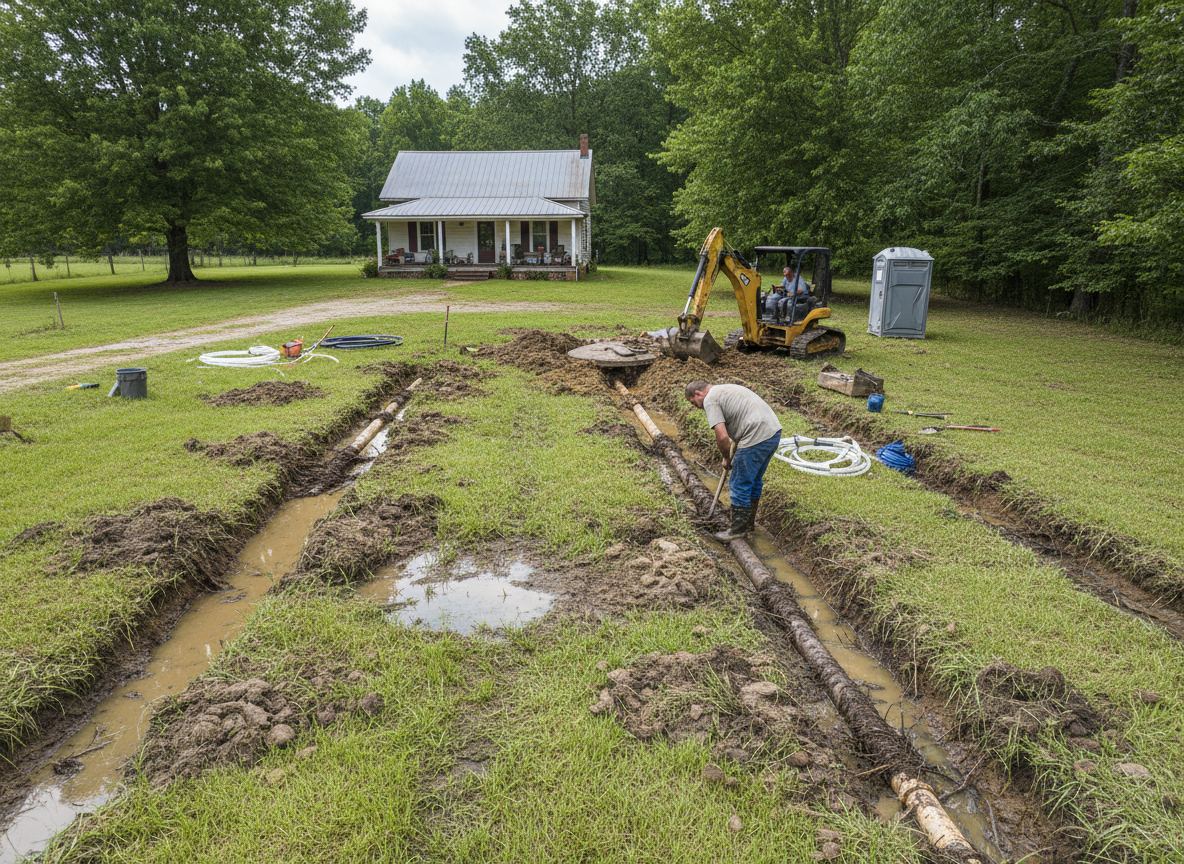
On rural lots off US-27 and GA-166, drain field problems often appear first as slow drains or gurgling in the house, followed by sewage odor near the tank or wet spots in the yard after heavy spring rain. Red clay soil that drains slowly holds water longer than sandy soils, and many older original tanks in Carroll County lack risers or effluent filters, allowing sludge and scum to reach the distribution box and saturate the field. We walk the lot looking for standing water, check the inlet and outlet tees, and probe soil moisture at multiple points to map where effluent is no longer percolating.
When a saturated drain field is suspected we locate the buried tank using the original permit sketch or electronic locating, then expose the distribution box to inspect for uneven flow or root intrusion from nearby trees common on Piedmont terrain. Float switches and pump chambers are tested on aerobic systems or pump-to-gravity setups found in newer subdivisions around the University of West Georgia area. We measure sludge and scum layers to determine if excess solids from garbage disposals or water softener discharge have migrated and clogged the laterals.
Heavy summer humidity and repeated spring downpours keep many fields near the Little Tallapoosa River borderline saturated for weeks, so we schedule follow-up visits after dry spells to confirm whether the field can recover or needs line replacement. Homeowners in the Maple Street Historic District and outlying areas of Villa Rica and Bremen often discover the problem only after backups reach the house because the tank lid is buried without a riser. Our checks focus on access, soil conditions, and load factors rather than assuming the field itself has failed.
Technician insight
In Carrollton, the thing that catches most people out with Drain Field Problems is how fast red clay on rural lots off GA-166 or near the Little Tallapoosa River stays saturated after just a few days of spring rain, especially when the original tank has no riser and the field was installed before newer subdivisions arrived.
Wet Spots After Spring Rains Near Adamson Square
A homeowner outside Carrollton noticed soft ground and odor behind the house following heavy rain. We located the buried tank, found the distribution box half full of solids that had bypassed a missing effluent filter, and confirmed the red clay field was holding water. After pumping the tank and replacing the filter we advised keeping heavy vehicles off the field and scheduled a dry-weather recheck.
Drain Field Problems Services We Offer
✓Drain Field Saturation Assessment
We probe soil moisture and trace effluent flow across the field to identify saturated zones caused by red clay and seasonal rain on rural Carroll County lots.
✓Distribution Box Inspection and Repair
We uncover and level the distribution box, clear blockages, and confirm even flow to laterals before roots or solids create uneven saturation.
✓Effluent Filter Cleaning and Replacement
Clogged effluent filters are removed, cleaned or swapped to stop solids from reaching and clogging the drain field lines.
✓Tree Root Intrusion Evaluation
Roots from nearby trees on Piedmont lots are located and removed from lines and the distribution box to restore proper drainage.
✓Pump Chamber and Float Switch Service
We test and repair pump chambers and float switches on systems serving homes off GA-61 and GA-16 where gravity flow is not possible.
How it works
- 1
Site Walk and Symptom Review
We examine the yard for wet areas, odors, and gurgling, then review recent rain patterns and household water use on the Carrollton lot.
- 2
Tank and Component Access
Lids are located and opened, sludge and scum layers measured, and inlet, outlet, and effluent filter conditions documented.
- 3
Field and Soil Evaluation
The distribution box is checked for even flow, soil is probed for saturation, and root or solids intrusion is noted.
- 4
Findings and Next Steps
We explain whether the field can recover after pumping or requires further work based on clay soil and access conditions.
Quotes
The cost for addressing drain field problems depends on tank size, access and condition.