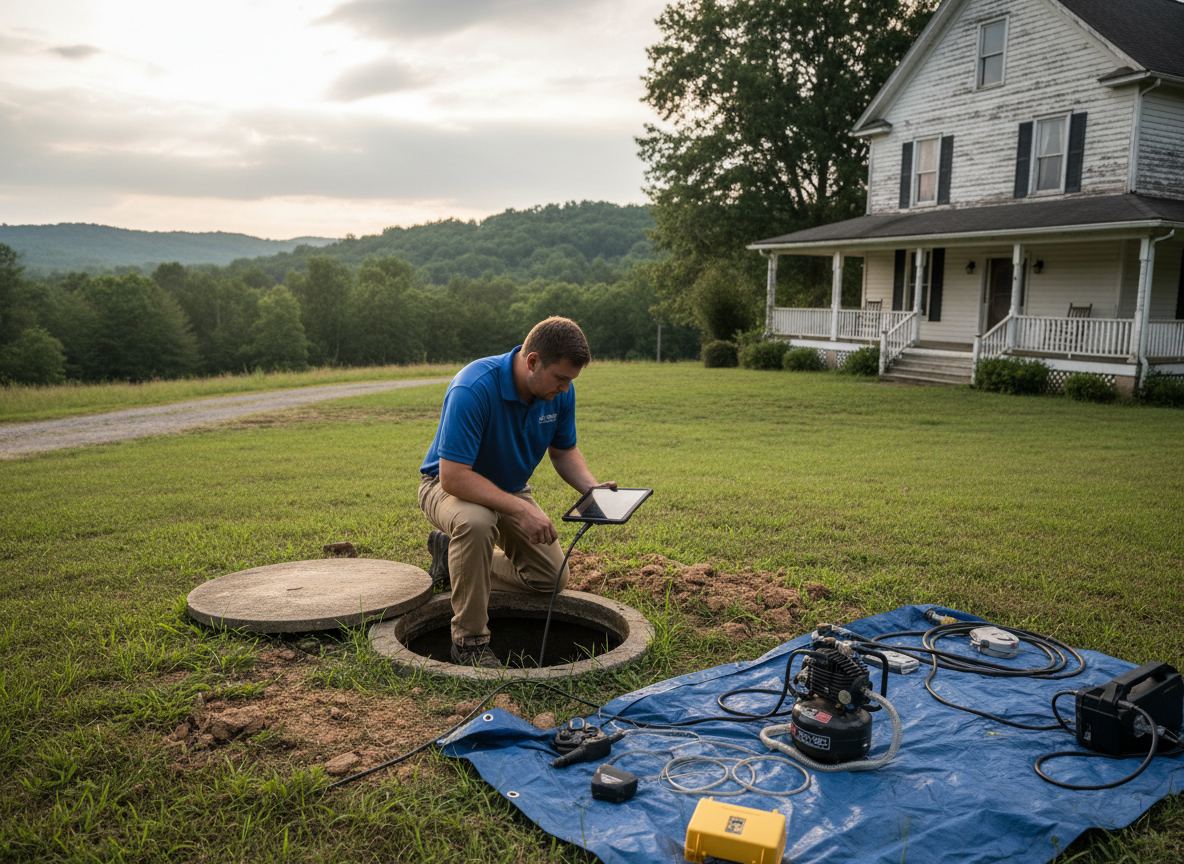
On rural lots off sewer around Carrollton, we locate the buried tank and expose the inlet and outlet tees to measure sludge and scum layers against the baffles. Red clay soil that drains slowly often masks early drain field saturation, especially after heavy spring rain along the Little Tallapoosa River corridor. We also check for tree roots invading older tanks near the Maple Street Historic District and note any water softener discharge lines that accelerate scum buildup.
Distribution boxes and effluent filters are examined next because saturated fields in Piedmont terrain frequently send effluent back toward the house before any odor or gurgling appears. On properties near the University of West Georgia we flag aerobic system float switches that stick after humid summers and test pump chambers on newer subdivisions where garbage disposal loads have overloaded the system. Access risers and lids are verified for secure fit so future pumping stays straightforward.
Final assessment covers the full absorption area for signs of backup or sewage odor that could affect closing. We document how GA-166 and GA-61 corridor lots with original tanks handle volume differently than newer setups in Bremen or Villa Rica. Every finding is recorded so buyers understand exactly what maintenance the system needs before the sale moves forward.
Technician insight
In Carrollton the thing that catches most people out with Real Estate Septic Inspection is how quickly red clay holds water after a heavy spring rain. Older tanks near Adamson Square or UWG often look fine from the surface yet the drain field is already backing up because the clay never lets it dry out between storms. Homeowners skip checking the field and then the sale stalls when the buyer walks the property after rain.
Carrollton Lot Near UWG
A buyer requested inspection on a rural property off GA-166 before closing. We located the tank and found the drain field fully saturated from recent rain on the clay soil. The outlet tee was partially blocked by roots. We cleared the tee, documented the field condition and advised the buyer the field would need replacement within two years.
Real Estate Septic Inspection Services We Offer
✓Inlet and Outlet Tee Inspection
We expose and evaluate the inlet and outlet tees to confirm they remain intact and properly positioned so wastewater flows correctly into the tank and out to the drain field.
✓Sludge and Scum Layer Measurement
Depth of sludge and scum is measured against tank baffles to determine how close the system is to needing pumping before the real estate transaction closes.
✓Drain Field Saturation Assessment
The absorption area is probed for standing water or slow percolation caused by red clay and seasonal rain so buyers know if the field is still functional.
✓Effluent Filter and Baffle Check
Filters and baffles are inspected for clogs or damage that allow solids to reach the drain field and shorten its lifespan on older Carroll County lots.
✓Riser and Lid Access Evaluation
Existing risers and lids are checked for proper sealing and height so future service visits remain safe and efficient after the property changes hands.
How it works
- 1
Site and Record Review
We walk the lot and review any available septic records to locate the tank and note property features like tree cover or outbuildings that affect access.
- 2
Tank Exposure and Pumping
The tank is uncovered, contents are removed, and interior walls plus baffles are examined for cracks or root intrusion common on older rural properties.
- 3
Component and Field Testing
Inlet and outlet components, effluent filter, distribution box and drain field are tested for flow, saturation and odor under current soil conditions.
- 4
Findings Report Delivery
A written summary of tank condition, layer depths and field performance is provided so the buyer and seller have clear information for negotiations.
Quotes
Cost depends on tank size, access and condition.