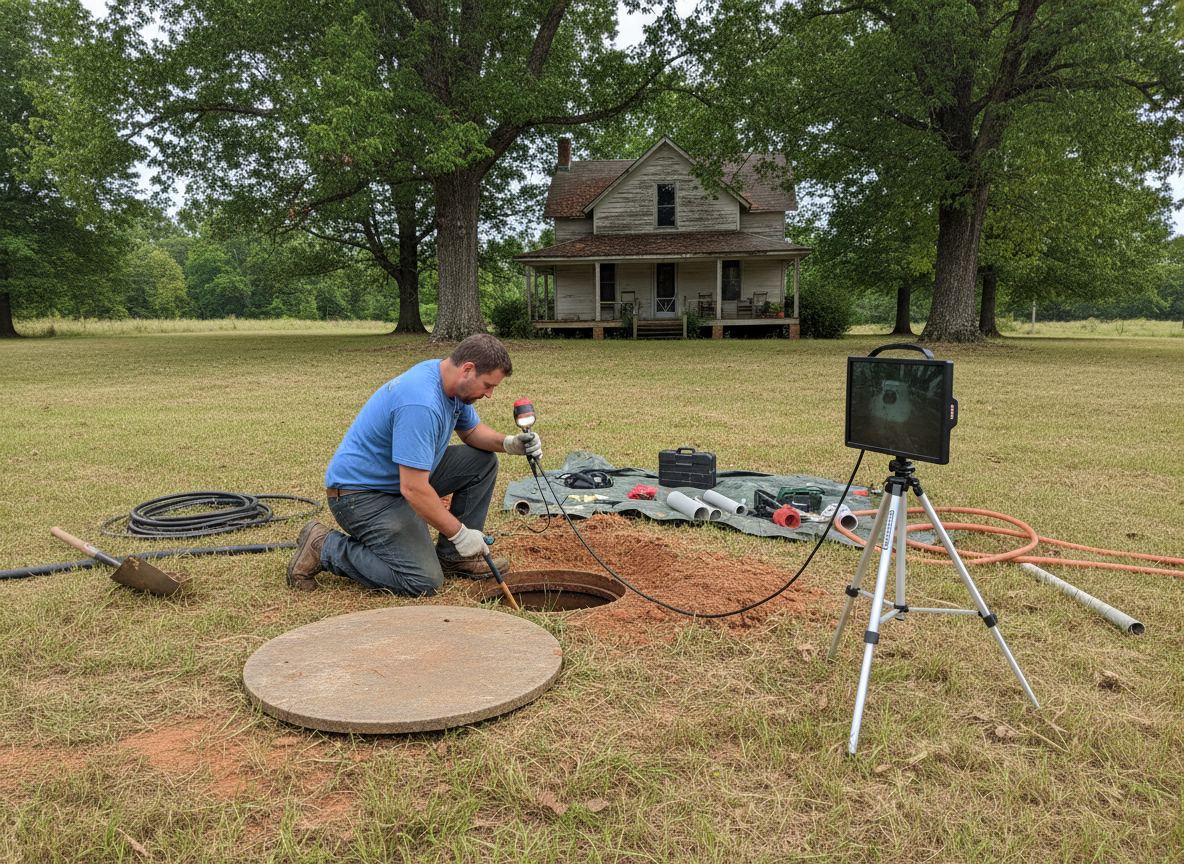
On rural lots off GA-166 or near the Little Tallapoosa River, we begin by locating the buried tank and checking for signs of surface water pooling or sewage odor near the distribution box. Red clay that drains slowly means even moderate rain can push effluent toward the surface, so we note any soft spots or vegetation changes that indicate a saturated drain field. Older tanks common in the Maple Street Historic District and around Adamson Square often lack risers, forcing us to dig carefully to inspect inlet and outlet tees without damaging the lid.
Once the tank is open we measure sludge and scum layers against the baffles and examine the effluent filter for clogging from water softener discharge or garbage disposal load. We check the pump chamber, float switch operation, and any aerobic system components if present. Tree roots from Piedmont terrain frequently invade older tanks, so we look for cracks or shifted concrete that could allow groundwater intrusion during heavy spring rains.
After the tank work we walk the drain field lines, probing for compaction or root intrusion that restricts flow on these heavy clay soils. We test for gurgling at fixtures and check whether sewage backup has occurred. Findings are recorded with photos and mapped against the lot layout so homeowners know exactly which components need attention before the next wet season arrives.
Technician insight
In Carrollton, the thing that catches most people out with Septic Inspection is how fast red clay saturates after a heavy spring rain on those older rural lots off US-27. Homeowners often assume a gurgling toilet is just a minor clog when the real issue is a distribution box half full of roots or a filter never cleaned since the house was built. Checking the field lines while the soil is still wet tells you more than any dry-season visit ever will.
Saturated Field Near Bremen Road
A homeowner on a rural lot off GA-61 noticed slow drains after several days of rain. We located the tank, found the effluent filter clogged and the drain field soft in two sections. We cleaned the filter, confirmed the distribution box was clear, and advised avoiding laundry loads until the soil dried. The system returned to normal function without further work.
Septic Inspection Services We Offer
✓Baffle and Tee Inspection
We expose and examine inlet and outlet baffles plus tees to confirm they are intact and properly positioned so solids stay in the tank instead of reaching the drain field.
✓Sludge and Scum Layer Measurement
Depth readings of sludge and scum layers show whether pumping is needed and how quickly solids are accumulating on Carrollton properties with garbage disposals.
✓Effluent Filter Evaluation
The filter is removed, cleaned, and checked for damage or heavy buildup that could restrict flow and send untreated water into the absorption area.
✓Drain Field Assessment
Probes and visual checks across the field identify saturated zones caused by slow-draining red clay or heavy spring rain before backups reach the house.
✓Riser and Lid Access Check
We verify that risers and lids are secure, at proper grade, and of cracks so future inspections and pumping do not require extensive excavation.
How it works
- 1
Site Arrival and Visual Walk
We park on the lot, note any odors or wet areas, and locate the tank using existing records or probing on rural Carroll County properties.
- 2
Tank Exposure and Opening
Risers or lids are uncovered, the tank is opened safely, and water levels plus surface conditions inside are recorded before any component checks begin.
- 3
Component Measurement and Testing
Baffles, tees, filter, sludge depth, pump chamber, and float switch are inspected; the drain field is probed for saturation on clay soils.
- 4
Findings Review and Mapping
Results are explained on site with photos and a simple map showing tank, lines, and any problem areas for the homeowner to keep on file.
Quotes
The cost of a septic inspection depends on tank size, access and condition.